
Secure Health Data with Intelligence-Driven DLP
Safeguard electronic protected health information (ePHI), protect sensitive healthcare data, and mitigate insider threats across your organization. Teramind delivers a data loss prevention (DLP) platform built for healthcare providers, combining data discovery with appropriate security controls to stop data loss in real-time.
Trusted by 10,000+ organizations to improve productivity, security, compliance, and workforce analytics






The Pillars of Healthcare Data Security
Data breaches destroy patient trust. Secure medical records and sensitive patient information from unauthorized data transfers. Our DLP tools use access controls and data discovery to ensure data integrity across your ecosystem.
Navigating the Health Insurance Portability and Accountability Act (HIPAA) is complex. Automate audit trails and maintain tamper-proof logs to ensure compliance with regulatory requirements. Simplify incident response for regulatory compliance.
Human error and insider threats pose severe security risks. Detect user behavior that threatens patient information or claims data. Prioritize protection efforts by identifying security gaps before they lead to data loss.
Healthcare settings involve complex data transmission. Visualize the data flow of regulated data across cloud services and endpoints. Ensure secure data handling for research data and unstructured data without hindering operational efficiency.
Intelligent Data Discovery & Classification
Legacy tools struggle to identify sensitive information in unstructured data. Teramind provides deep visibility, helping you safeguard patient data by distinguishing between structured data (like databases) and loose files. We help you build DLP strategies that protect sensitive data effectively.
Automatically locate and classify sensitive data such as protected health information (PHI) and personally identifiable information. Apply appropriate safeguards dynamically based on risk.
Secure proprietary research data and claims data. Prevent security risks associated with unauthorized data transfers to external drives or personal clouds.
Enforce access controls based on roles. Ensure only authorized staff have access to electronic health records, maintaining strict data protection practices.
Insider Risk & Human Error Prevention
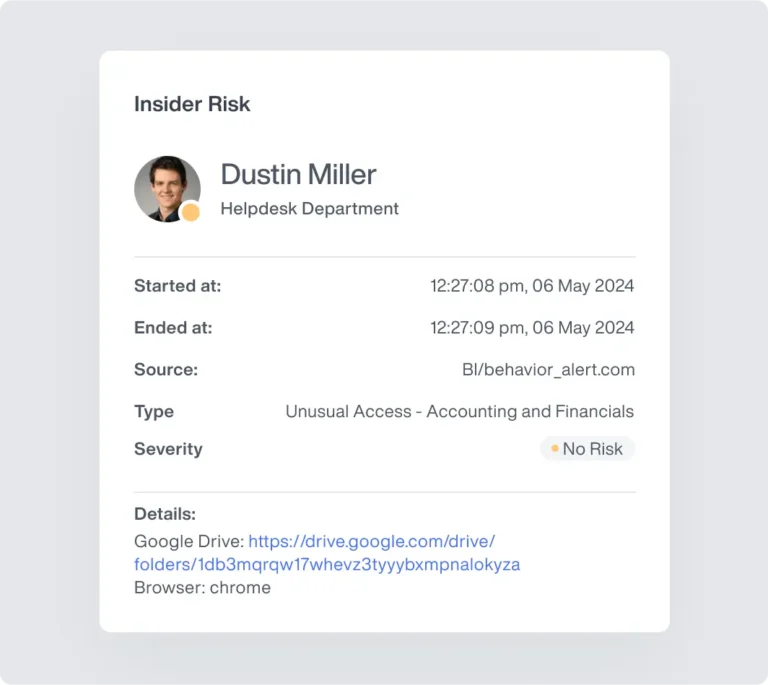
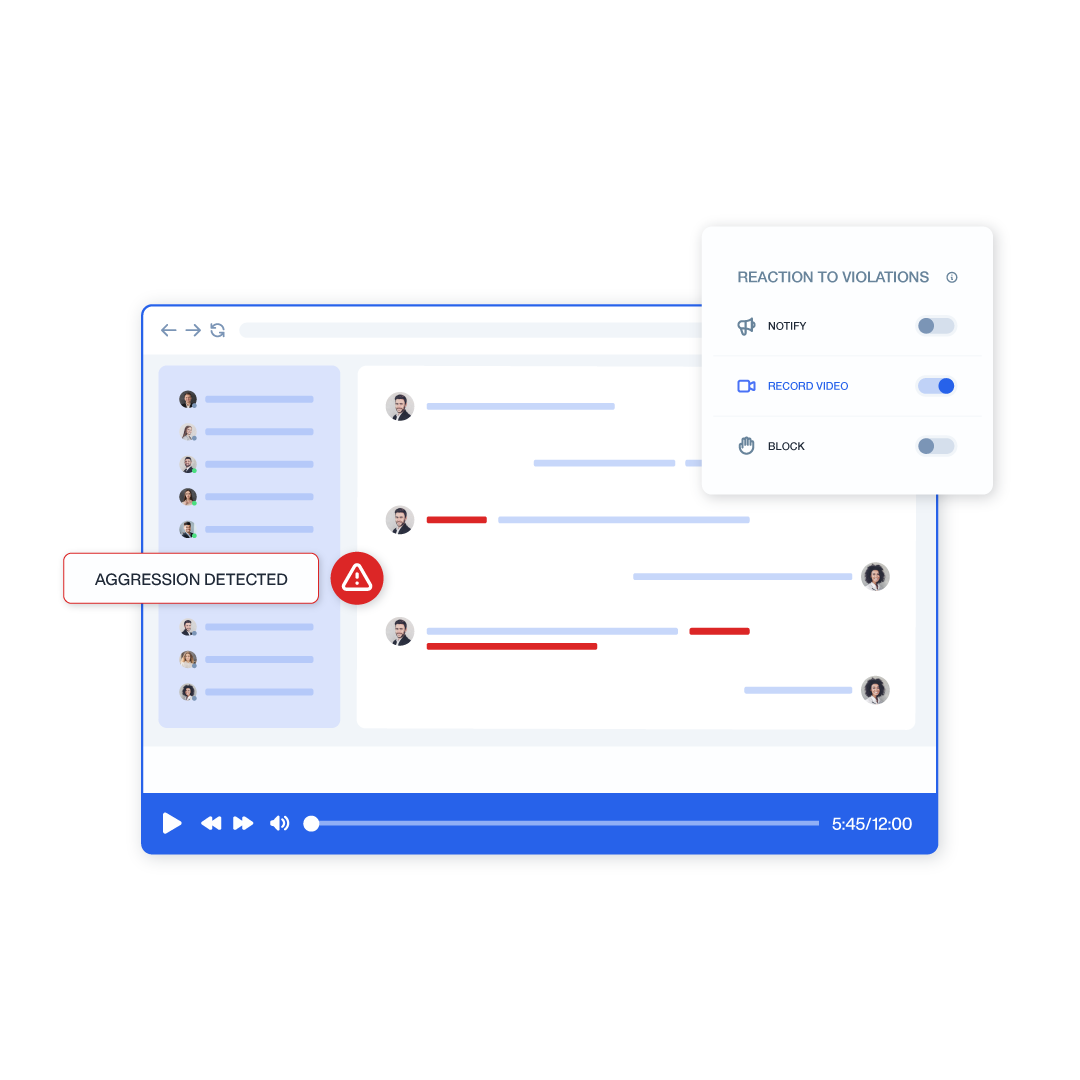
Inadequate security measures often lead to data breaches. Teramind combines user behavior analysis with forensic screen recordings to spot insider threats and human error. This allows healthcare organizations to intervene before patient records are compromised.
Identify users attempting to access data without authorization. Stop employees from mishandling sensitive information or exposing healthcare data to identity theft risks.
Human error is a leading cause of loss prevention failures. Automated alerts warn users if they try to send patient data to the wrong recipient, ensuring secure data handling.
Use screen recordings, logs, and screenshots to investigate security incidents. See exactly why a breach occurred, helping you refine your risk assessment and protect patient information.
Regulatory Compliance (HIPAA, GDPR)
The healthcare industry faces stringent security measures. From HIPAA compliance to GDPR, Teramind provides the audit trails and data protection measures needed to satisfy auditors and avoid fines.
Maintain tamper-proof records of all access to electronic protected health information. Prove to regulators that data protection standards and accountability act mandates are met.
Implement appropriate security controls. Ensure patient data is handled according to regulatory requirements, reducing the risk of compliance violations.
Strengthen your incident response capabilities. Real-time alerts allow for immediate action, minimizing the impact of any data loss event on healthcare data.
Operational Visibility & Training
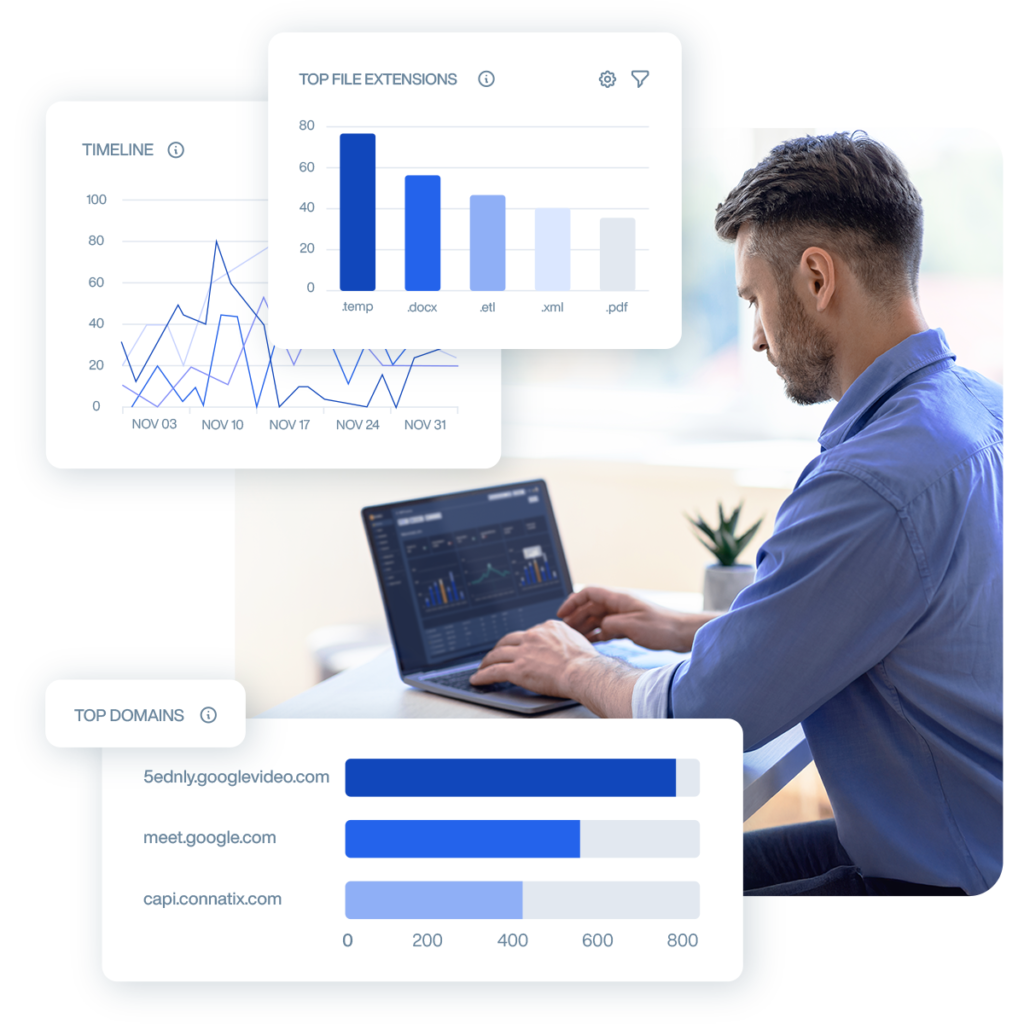
Operational efficiency shouldn’t come at the cost of security. Teramind provides visibility into data handling processes, helping you identify security gaps and improve comprehensive employee training within healthcare settings.
Track the movement of health data across the network. Identify high-risk data transmission paths and apply dlp strategies to protect sensitive patient data.
Deliver comprehensive employee training moments when policies are violated. Educate staff on protecting healthcare data and proper data protection practices in real-time.
Conduct a thorough risk assessment using real-world data. Identify key components of your security risks and adjust security controls to maintain regulatory compliance.
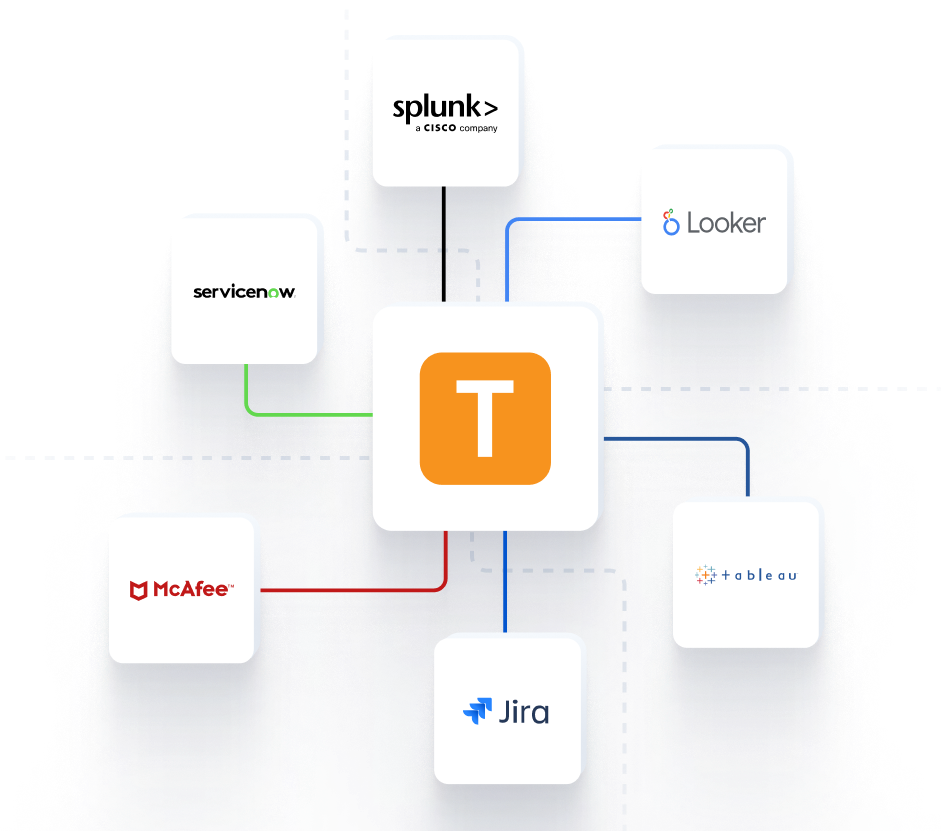
Seamless Integration into Your Command Center
Feed critical behavioral telemetry directly into your existing security infrastructure for a unified operational picture.


Teramind Success Stories
Arrivia Stopped an Insider Data Theft Ring with Teramind
Learn how a leading travel company used Teramind to improve productivity and ensure compliance with federal regulations while building legally defensible evidence for any violations.
FAQs
How does Teramind support HIPAA compliance?
Teramind supports HIPAA compliance by providing visibility into access to protected health information (PHI). We offer audit trails and security controls to help healthcare providers prove they are safeguarding patient data according to the Health Insurance Portability and Accountability Act.
Can you protect unstructured data?
Yes. Understanding data loss prevention means protecting all data types. We prioritize data discovery for both structured data (databases) and unstructured data (documents, emails), ensuring sensitive patient information is secure regardless of format.
What is the difference between PHI and PII?
Protected health information (PHI) relates specifically to health records, while personally identifiable information (PII) includes broader identity data. Our DLP tools identify and protect sensitive patient data across both categories to prevent identity theft.
How do you handle insider threats in healthcare?
We mitigate insider threats by analyzing user behavior. If an employee attempts unauthorized data transfers or accesses patient records without cause, we identify the security risk and enable appropriate security controls to protect patient data.
Does this help with GDPR?
Yes. For global healthcare organizations, we support the General Data Protection Regulation. We help you maintain regulatory compliance by ensuring patient information is handled with stringent security measures and proper data access governance.
Is forensic screen recording compliant?
Yes, when used for security and compliance. Our forensic capabilities provide the context needed for incident response and risk assessment, helping healthcare providers ensure accountability and protect sensitive data.
How do you improve operational efficiency?
By visualizing data flow and user behavior, we help you identify bottlenecks in claims data processing and data handling. This allows you to improve operational efficiency while maintaining robust data protection measures.